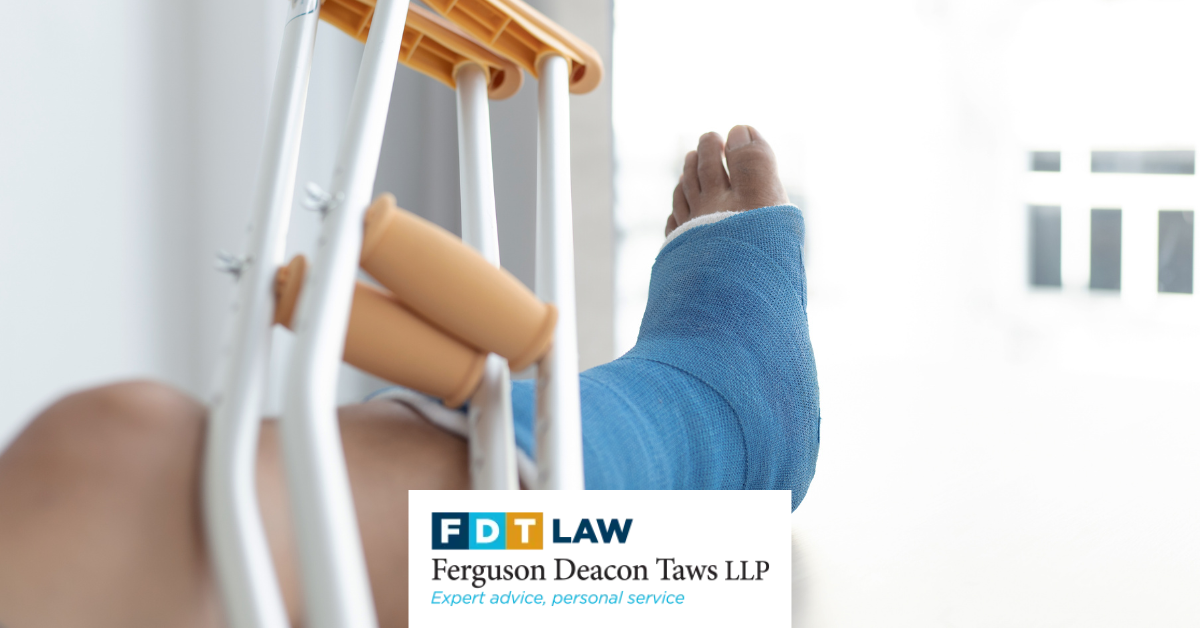
You were hurt. Now you’re wondering if the law applies to you.
You did not expect to be hurt. Maybe another driver ran a red light and hit your car. Maybe you slipped on ice outside a store that had not been salted in days. Maybe you were hurt on someone else’s property, and now you are dealing with pain, missed work, and a pile of medical bills.
And somewhere in the middle of all of that, a question comes up:
Do I have the right to do something about this?
The honest answer is: you might. And the only way to know for sure is to understand what personal injury law in Ontario actually covers, and what a personal injury lawyer can do for you.
That is exactly what this article explains, without the legal jargon.
What is Personal Injury Law in Ontario?
Personal injury law in Ontario is part of civil law that lets you seek financial compensation when you are hurt because of someone else’s negligence or wrongful act. It is not criminal law. No one goes to jail. It is a private legal claim you bring as an individual against the person or organization responsible for your injury.
The Legal Foundation: Tort Law in plain language
Personal injury law falls under what lawyers call tort law. A tort is simply a civil wrong. When someone fails to act with reasonable care, and their failure causes you harm, the law gives you the right to claim compensation for what you have lost.
Think of it this way. Every driver on the road has a responsibility to drive safely. Every business has a responsibility to keep its property reasonably safe for visitors. These are called duties of care. When someone breaks that duty, and you get hurt because of it, you may have a personal injury claim in Ontario.
Ontario’s personal injury law draws from common law principles built up over many decades, as well as from specific provincial statutes, including the Occupiers’ Liability Act, 1990, the Dog Owners’ Liability Act, 1990, and the Statutory Accident Benefits Schedule (SABS) under the province’s insurance regime. Together, these laws set out when someone owes you a duty, what happens when they breach it, and what you are entitled to when they do.
How courts decide if it happened:
To have a successful personal injury claim in Ontario, four things generally need to be established:
- Duty of care – the other person had a legal responsibility to act carefully around you. Every driver on the Barrie bypass owes that to other road users. Every store owner in Midland owes it to every customer who walks in.
- Breach of that duty – they were not careful. They ran a red light. They left the ice uncleared. They ignored a hazard they knew about.
- Causation – their carelessness directly caused your injury. There needs to be a clear, provable link between what they did (or failed to do) and what happened to you.
- Damages – you suffered real, measurable harm. Physical pain, lost income, medical expenses, or a reduced quality of life.
All four need to be present. If even one is missing, the claim may not succeed. This is why speaking to a personal injury lawyer early, before you sign anything or give a statement to an insurer, matters so much.
What is considered Personal Injury? Types of cases in Ontario
Personal injury covers more situations than most people realize. You do not need to be in a catastrophic accident to have a claim. Personal injury is any physical, psychological, or financial harm caused by another party’s negligence or intentional wrongful act. Here are the most common types of personal injury cases in Ontario:
Motor Vehicle Accidents
Car crashes, truck accidents, motorcycle collisions, and pedestrian accidents are the most common sources of personal injury claims in Ontario.
If another driver caused the accident, you may have two different claims available at the same time:
- The first is an accident benefits claim through your own insurer under Ontario’s Statutory Accident Benefits Schedule, available regardless of who was at fault, covering medical treatment, physiotherapy, lost income, and attendant care.
- The second is a tort claim against the at-fault driver for compensation beyond what accident benefits provide.
If you were hurt in a car accident, our guide on how to pursue a car accident claim in Ontario explains the process in detail.
Slip and Fall Accidents (Occupiers’ Liability)
Property owners in Ontario owe visitors a legal duty to keep their premises reasonably safe, under the Occupiers’ Liability Act, 1990. If you slipped on an icy Collingwood parking lot that had not been cleared, tripped on a broken step in a Barrie shopping centre, or fell because of a hazard the owner knew about and ignored, you may have a valid claim.
Act quickly in these cases. Photos, security footage, and witnesses can all disappear fast. The sooner you speak to a personal injury lawyer, the more evidence can be preserved.
Assault and Intentional Harm
Personal injury law is not just for accidents. If you were assaulted, whether at a bar, a sports event, or anywhere else, you can bring a civil claim against the person who hurt you. You can do this even if no criminal charges were laid. Civil claims and criminal proceedings are completely separate.
Catastrophic Injuries (Brain, Spinal, Orthopedic)
Some injuries permanently change how you live and work. Brain injuries, spinal cord injuries, and serious orthopedic injuries often require years of treatment and ongoing care. Ontario courts treat these cases differently. The compensation available is significantly higher, and the calculations involve long-term medical cost projections and expert evidence. FDT Law has specific experience with brain injury claims and spinal cord injury claims across Ontario.
Other Negligence Claims (Product Liability, Dog Bites, Psychological Injury)
Personal injury in Ontario also covers product liability (injuries caused by dangerous or defective products), dog bites (the Dog Owners’ Liability Act, 1990 makes owners strictly liable for bites in most circumstances), and psychological injuries caused by another person’s wrongful conduct where the mental harm is serious and provable.
Not every difficult situation turns into a successful claim. Each case has to be looked at on its own facts. A personal injury consultation is exactly how you find out where you stand.
What Compensation Can You Receive in a Personal Injury Claim?
Compensation in a personal injury case is not one single amount. It is built from several different categories, each one tied to a specific type of loss you have experienced. Here is what may be available to you:
General Damages (Pain and Suffering)
This covers the physical pain, emotional suffering, and loss of enjoyment of life your injury has caused. It is harder to put an exact number on than your out-of-pocket costs, but it is a recognized and real category of loss under Ontario law. In motor vehicle accident tort claims specifically, Ontario’s insurance legislation applies a statutory deductible to general damages below a certain threshold, but this does not mean these damages are unavailable.
Special Damages (Out-of-Pocket Losses)
These are your actual, documented costs: doctor visits, physiotherapy, prescription medication, mobility aids, home care, and anything else you have had to pay for because of the injury. Keep every receipt and record from the beginning of your recovery. These are concrete losses that can be calculated clearly.
Future Care Costs
For serious or permanent injuries, Ontario courts can award compensation for the projected cost of ongoing medical treatment, rehabilitation, and care that will be needed in the future. These calculations require expert medical and financial evidence. They are one of the main reasons the gap between an insurer’s initial offer and what you may actually be owed can be very significant.
Loss of Income and Earning Capacity
If your injury has stopped you from working, or has reduced your ability to earn income going forward, you may be entitled to compensation for both past lost wages and your reduced earning ability over your working life. This applies whether you are an employee, self-employed, or running your own business.
The Deductible and Threshold in Ontario MVA Claims
In motor vehicle accident tort claims, Ontario’s insurance system applies a statutory deductible to general damages that fall below a prescribed threshold. This is a nuance that affects how claims are valued, and it is one of many reasons why having an experienced personal injury lawyer review your situation from the start leads to a far more accurate picture of what you are entitled to.
No honest lawyer will quote you a number before sitting down with the full facts of your case. What FDT Law can tell you in a first consultation is whether your situation gives rise to a claim, and which categories of loss apply to you.
Key timelines you need to know in Ontario Personal Injury Law
The Two-Year Limitation Period
Under Ontario’s Limitations Act, 2002, most personal injury claims must be started in court within two years of when you knew, or reasonably should have known, that you had a claim. If you miss this deadline, you will generally lose the right to make the claim at all, no matter how strong it is.
There are some exceptions, for example, for children, or for people who were incapacitated, or when the injury was not immediately obvious. But these exceptions are narrow and cannot be counted on as a reason to delay.
Accident Benefits Deadlines
If your injury came from a car accident, the deadlines for your accident benefits application are much shorter than two years. Some applications need to be submitted within seven days of the accident. Others within 30 days. Missing these windows will not always end your benefits claim, but it creates complications and gives your insurer reason to dispute your coverage.
Why Acting Early Matters
Evidence disappears. Witnesses move on. Security camera footage gets erased. The earlier you speak to a personal injury lawyer, the stronger your position. A consultation at FDT Law is free of charge and does not commit you to anything. It gives you the information you need to decide your next step.
What does a Personal Injury Lawyer do in Ontario?
A personal injury lawyer in Ontario figures out whether you have a valid claim, builds the evidence to support it, deals with the insurance company so you do not have to, works out exactly what you are owed, negotiates a fair settlement, and takes the case to court if the insurer will not pay fairly. They work on a contingency fee basis, which means you pay nothing unless you win.
Here is what each of those steps actually looks like:
Assessing Your Claim
A good personal injury lawyer starts by listening. They want to understand what happened, how it has affected your life, and what you are going through right now. From that, they give you an honest picture of whether you have a viable claim, what legal path makes sense, and what to expect going forward. You should walk out of that first meeting understanding your situation better, not more confused.
Investigating and Building the Evidence
If you have a valid claim, your lawyer gets to work. That means gathering medical records and treatment notes, obtaining accident reports and police records, securing witness statements, and bringing in expert opinions where needed, from doctors, accident reconstruction specialists, occupational therapists, or economists who can calculate your future income losses. A strong case needs strong evidence, and building that record properly takes skill and time.
Handling the Insurance Company
This is one of the most important things a personal injury lawyer does for you. Insurance adjusters are experienced at settling claims for less than they are worth. Statements you give early in the process, even things that seem harmless, can be used against you later. Your lawyer takes over all communication with the insurer. Nothing goes to them without being reviewed first. Every obligation the insurer owes you is tracked and enforced.
Negotiating Your Settlement
Most personal injury claims in Ontario are resolved through negotiation, not a trial. Your lawyer calculates your full entitlement across accident benefits, common law damages, and applicable statutory rights, then negotiates directly with the insurer. In our experience at FDT Law, the difference between an insurer’s first offer and a properly negotiated settlement is often very significant.
Representing You in Court
If the insurer will not make a fair offer, your lawyer takes the case to court. That means preparing and filing legal documents, handling the examination for the discovery process, managing expert witnesses, and presenting your case before a judge. Most personal injury clients never end up at trial, but knowing your lawyer is fully prepared to go there gives you real leverage at every stage.
The Contingency Fee Model: No Upfront Cost
FDT Law’s personal injury team is led by Michael LaPlante, a Certified Specialist in civil litigation with decades of experience helping injured clients across Ontario. FDT Law works on a contingency fee basis. You pay nothing up front. If your case results in a recovery, our fee is a percentage of the settlement, typically between 25% and 33%, depending on how complex the matter is and how long it takes to resolve. No win, no fee.
This matters because access to justice should not depend on your financial situation at the time you were hurt. It is how FDT Law has been able to help injured clients across Innisfil, Midland, Barrie, Orillia, and the wider Ontario region for over 50 years.
Why choosing a local Ontario Personal Injury Lawyer matters
Local Knowledge Makes a Difference
A personal injury lawyer who knows your area understands the local courts and how they operate. They know the medical providers and rehabilitation facilities nearby. They understand how insurance adjusters in your region typically approach claims. That local context shapes the advice you get and the result you achieve.
Whether you are looking for a personal injury lawyer in Innisfil, Midland, Orillia, Collingwood, or Cornwall, having a lawyer who can meet you in person and who is genuinely invested in your community is not a small thing. It is the kind of trust that matters when you are already dealing with something hard.
Injured in Ontario? Talk to a Personal Injury Lawyer at FDT Law.
Being hurt is hard enough on its own. Dealing with insurance companies, medical appointments, and lost income on top of it, while not knowing whether you even have the right to ask for help, is genuinely overwhelming.
You do not have to figure this out alone.
A consultation with FDT Law costs you nothing and commits you to nothing. It gives you a clear answer about where you stand and what your options are. Our personal injury team serves clients right across Ontario, with offices in Innisfil and Midland, and meeting spaces in Orillia, Collingwood, Cornwall, and communities across the province. No fees unless we win your case.
Call FDT Law’s Innisfil office: (705)-436-1701
Call FDT Law’s Midland office: (705) 526-1471
Toll-free: 1-800-563-6348
Book a consultation online: fdtlaw.ca/contact
Learn more about our personal injury services: fdtlaw.ca/our-expertise/personal-injury/
Frequently Asked Questions About Personal Injury Law in Ontario
What is personal injury law in Ontario?
Personal injury law in Ontario is part of civil law that lets you seek compensation when you are hurt because of someone else’s negligence or wrongful act. It covers car accidents, slip and falls, assaults, product liability claims, dog bites, and catastrophic injuries. It is a private legal claim, entirely separate from criminal law, brought by the injured person against the party responsible for the harm.
What does a personal injury lawyer do?
A personal injury lawyer reviews your situation, tells you honestly whether you have a claim, gathers the evidence to support it, handles all contact with insurance companies on your behalf, calculates what you are owed, negotiates a fair settlement, and represents you in court if needed. Most personal injury lawyers in Ontario, including FDT Law, work on a contingency fee basis, meaning you pay no legal fees unless your case is won.
What is considered personal injury in Ontario?
Personal injury in Ontario includes any physical, psychological, or financial harm caused by another party’s negligence or intentional wrongful act. Common examples include motor vehicle accidents, slip and fall accidents on unsafe property, assaults, injuries from defective products, dog bites, and serious or catastrophic injuries resulting in permanent disability. The harm need not be severe to qualify. It needs to be real, measurable, and caused by someone else’s failure to act with reasonable care.
How long do I have to file a personal injury claim in Ontario?
Under Ontario’s Limitations Act, 2002, most personal injury claims must be started within two years of when you knew, or should have known, you had a claim. For motor vehicle accident benefits, some deadlines are as short as seven days after the accident. Missing these deadlines can permanently end your right to claim. Speak to a personal injury lawyer as soon as you can.
Do I need a personal injury lawyer to make a claim in Ontario?
You are not legally required to have one, but it makes a real difference. Insurance companies have experienced adjusters whose job is to settle your claim for as little as possible. A personal injury lawyer calculates what you are actually owed, handles the insurer for you, and makes sure you do not say or sign something that harms your claim. Because most personal injury lawyers work on a contingency fee basis, there is no upfront cost to retaining one.
How much does a personal injury lawyer cost in Ontario?
Most personal injury lawyers in Ontario, including FDT Law, work on a contingency fee basis. You pay nothing up front. If your case is successful, the fee is a percentage of the settlement, typically 25% to 33%, depending on the complexity of the case. There are no hourly fees and no charges while your case is in progress.
What is the difference between a tort claim and accident benefits in Ontario?
Accident benefits under Ontario’s Statutory Accident Benefits Schedule (SABS) are provided by your insurer and are available regardless of who caused the accident. They cover medical treatment, rehabilitation, income replacement, and attendant care. A tort claim is a separate legal action against the at-fault party for additional compensation, including pain and suffering, future care costs, and lost earning capacity. After a motor vehicle accident in Ontario, both can and often should be pursued at the same time.