Personal Injury and Civil Litigation Lawyer in Orillia
If you or a family member has been injured in Orillia or Central Ontario, FDT Law offers free consultations and works on a contingency basis, meaning no legal fees unless we recover compensation for you.
Free Case Evaluations
Speak directly with an experienced legal professional at no upfront cost.
No Fee Unless We Recover
Personal injury and disability cases handled on a contingency fee basis.
Flexible Meeting Options
Available by appointment in Orillia or by phone and video from wherever you are.
Personal Injury & Civil Litigation Lawyers Serving Orillia + Central Ontario

Orillia is a hub for the Couchiching corridor, Simcoe County, and the communities along all three highway routes that feed into it. FDT Law serves clients in Orillia, Ramara, Severn, Oro-Medonte, and the surrounding region by appointment at 77 Coldwater Street East, Orillia, ON L3V 1W6.
Whatever your situation, our job is to make sure you understand your options and that your rights are protected while you focus on recovery.

FDT Law Orillia
*FDT Law serves Orillia and Central Ontario clients by appointment at 77 Coldwater Street East, Orillia.
FDT Law (Ferguson Deacon Taws LLP) Orillia
Our meeting space at 77 Coldwater Street East puts us in the heart of downtown Orillia, steps from the Orillia Opera House and the Orillia Museum of Art and History. Clients arriving from Highway 400, Highway 11, or Highway 12 will find us easy to reach from any direction.
Toll-Free Phone
Motor Vehicle Accident Lawyers Serving Orillia
The stretch of Highway 400 north of Barrie, Highway 11 through Orillia, and Highway 12 heading toward Midland carry a combination of commuter traffic, seasonal tourist volume, and heavy commercial transport year-round. That mix creates real collision risk: rear-end impacts, multi-vehicle crashes, and hit-and-run incidents are all documented on these corridors. If you were injured in a motor vehicle accident anywhere along these routes or within the Orillia area, Ontario law gives you rights regardless of who caused the crash.
Want to learn more about the motor vehicle accident claims process in Ontario? Visit our full Motor Vehicle Accident page for details on common injuries, timelines, and what to expect.
Ontario SABS Rights and the 2026 Auto Insurance Reforms
Every person injured in an Ontario motor vehicle accident has access to no-fault accident benefits through their own insurer under the Statutory Accident Benefits Schedule (SABS). This applies regardless of fault.
What that coverage actually includes changed significantly on July 1, 2026. Under the current framework, standard auto policies only mandate core Medical, Rehabilitation, and Attendant Care benefits. Several other forms of financial protection, including income replacement and housekeeping assistance, are now classified as optional coverages that must be actively selected before a collision occurs. If you did not opt in, those benefits may not be available to you.
Benefit categories that may be available under your policy include:
- Medical and rehabilitation benefits to cover treatment and ongoing care
- Attendant care benefits if you require daily personal assistance
- Income replacement while you are unable to work
- Housekeeping and home maintenance support
Speaking with a lawyer as early as possible helps clarify what your specific policy covers and identifies any gaps before they affect your claim.
Understanding Injury Severity and Ontario SABS Caps
Your claim will typically involve two parallel streams: no-fault SABS benefits through your own insurer and, where another driver was at fault, a tort claim against that driver. The classification of your injury under Ontario’s framework determines how much is available through the SABS stream:
Minor Injury Guideline (MIG): Covers strains, sprains, and whiplash. Treatment funding is capped at $3,500. Insurers have a financial incentive to classify claims here, and disputing an improper MIG designation is one of the most valuable things a lawyer can do early in a claim.
Non-Catastrophic Impairments: Applies to more serious injuries such as fractures, significant ligament damage, or substantial psychological harm. Combined medical, rehabilitation, and attendant care benefits are available up to $65,000.
Catastrophic Impairments: Covers traumatic brain injuries, spinal cord damage, paralysis, and comparably severe outcomes. A catastrophic designation unlocks access to up to $1,000,000 in lifetime funding for long-term care.
We use your OCF-3 Disability Certificate and supporting medical records to pursue the maximum available under your specific policy.
Critical SABS Deadlines
Ontario’s general limitation period is two years, but several SABS deadlines fall well before that and missing any one of them can cost you benefits or your right to sue:
- 7 Days: Written notice to your auto insurer that the accident occurred.
- 30 Days: Completed OCF-1 Application for Accident Benefits submitted.
- 2 Years: Formal commencement of your lawsuit under the Limitations Act, 2002.
If the driver who hit you was uninsured or left the scene, a situation that occurs on high-volume corridors like the 400 and Highway 11, Ontario’s Motor Vehicle Accident Claims Fund (MVACF) provides an alternate compensation route with its own separate and stricter notice requirements. Do not wait to get legal advice if this applies to your situation.
Understanding the Ontario MVA Settlement Timeline
One of the most common questions from injury clients is how long a motor vehicle accident claim actually takes to resolve. Every case is different, but most personal injury matters in Ontario settle within 12 to 36 months. For clients injured on Highway 400, Highway 11, or Highway 12 near Orillia, here is how that process typically unfolds:
Stage 1: Medical Treatment and SABS Application (Weeks 1–4)
Your immediate priority is medical care. In parallel, your legal team works to meet the no-fault insurance deadlines that apply from day one, notifying your insurer within 7 days and submitting your OCF-1 Application for Accident Benefits within 30 days. Missing either window affects your access to benefits, so these steps happen immediately.
Stage 2: Building the Medical Record (Months 1–12)
As your treatment progresses, your legal team collects hospital records, clinical notes, specialist reports, and your OCF-3 Disability Certificate. We continue monitoring your recovery until you reach Maximum Medical Improvement (MMI), the point at which your condition has stabilized and the full picture of your long-term limitations becomes clear. This is the foundation your claim is built on.
Stage 3: Discovery and Insurer Negotiations (Months 6–18)
Where a tort claim against the at-fault driver is warranted, formal legal proceedings begin. Documents are exchanged, evidence is reviewed, and both sides assess the appropriate compensation range based on your specific injuries, treatment history, and impact on daily life and earning capacity.
Stage 4: Mediation and Resolution (Months 12–24)
The large majority of Ontario personal injury cases settle through a formal mediation process before reaching trial. For Orillia clients, this typically means resolution without the added stress and delay of a courthouse proceeding.
What Compensation May Be Available
Depending on your policy and the nature of your injuries, your claim may include financial recovery for:
- Medical, rehabilitation, and attendant care costs
- Lost income during recovery
- Long-term loss of earning capacity
- Pain and suffering (through a tort claim against the at-fault driver)
- Housekeeping and home maintenance costs
The majority of Ontario motor vehicle accident cases resolve through settlement, typically within 12 to 36 months, without going to trial.
Long-Term Disability Claims for Orillia Residents

Long-Term Disability Claims for Orillia Residents
A disability insurer denying or cutting off your benefits does not mean your claim is over. You have the right to challenge that decision. Disability coverage typically flows through employer group benefit plans or individual insurance policies, and it exists to protect your income when illness or injury takes you out of work.
Whether your claim was denied at the outset or cancelled after years of payments, your options include an insurer’s internal appeal, mediation, and civil litigation. Limitation periods run from the date of your denial letter, so contact a disability lawyer in Orillia as soon as possible after receiving one.
Navigating the Transition from STD to LTD
Most disability claims move through two distinct phases, and disputes can arise at either stage:
Short-Term Disability (STD): The initial phase of a claim, typically replacing a portion of income for up to six months. Denials at the STD stage are common and are frequently overturned on appeal.
Long-Term Disability (LTD): When an illness or injury keeps you off work beyond the STD period, the claim transitions to LTD. This is where most major disputes occur, either at initial approval or, more often, at the two-year mark.
The "Own Occupation" vs. "Any Occupation" Definition Trigger
The single most common cause of mid-claim LTD terminations is a definition shift that occurs automatically in most policies at the two-year mark:
Own Occupation (months 1–24): You must demonstrate that your condition prevents you from performing the specific duties of your own job.
Any Occupation (month 25 onward): The standard changes. You must now show you cannot perform any work you are reasonably suited for based on your education, training, or experience. This is a much harder threshold to meet, and insurers use it as the trigger to terminate a large proportion of ongoing claims.
If your benefits were cut off around the two-year mark, this definition shift is very likely what happened. A lawyer can help you understand whether that termination was valid.
Has your claim been denied or cut off? Visit our Long-Term Disability page for more on what happens next and how FDT can support your appeal.
Slip and Fall Injury Lawyers for Orillia Clients
Ontario’s Occupiers’ Liability Act requires property owners and occupiers, private residents, commercial businesses, and municipalities alike to keep their premises in a reasonably safe condition for people who use them. When they fall short of that standard, and someone is hurt as a result, the law provides a path to compensation.
Orillia’s waterfront areas, downtown streetscape, public parks, and lakefront trails are well-used year-round, and many are municipally maintained. That matters because a specific notice rule applies to falls on municipal property.
The Critical 10-Day Municipal Notice Warning
If your slip and fall happened on City of Orillia property: a sidewalk, public park, municipal building, or any other municipally maintained area, you must provide written notice of your claim to the municipality within 10 days of the accident. This is a hard deadline under the Municipal Act. Missing it can eliminate your right to pursue compensation entirely, regardless of how clear-cut the hazard was or how serious your injuries are.
It is one of the most important reasons to contact a lawyer quickly after a fall on public property, not weeks later.
Compensation in a successful property liability claim can cover medical costs, income replacement during recovery, and damages for pain and suffering.
Injured on someone else’s property? Visit our Slip and Fall page to learn more about occupier liability, the notice requirements, and how FDT handles these claims.

Civil Litigation Lawyers Serving
Orillia & Central Ontario
Personal injury is not the only reason clients come to FDT Law. We handle civil litigation matters across Orillia and the surrounding region, including wrongful dismissal and employment disputes, property insurance claim denials, small claims court matters up to $50,000, CPP disability appeals, and product liability claims. If another person, employer, or insurance company has caused you financial harm or violated your rights, a civil claim may be available to you. Initial consultations are free, and most civil matters are handled on a contingency basis.

50+
YEARS OF SERVICE
How FDT Law Supports Orillia Personal Injury Clients
Getting hurt is hard enough. You should not have to figure out insurance law, litigation timelines, and insurer negotiations on top of your recovery.
Appointments Available in Orillia
We serve Orillia clients by appointment at 77 Coldwater Street East, Orillia, ON L3V 1W6. Phone and video consultations are available for clients who cannot travel or are recovering from injuries.
No Fee Unless We Recover Compensation
FDT handles personal injury and long-term disability claims on a contingency basis. Your initial consultation is free, and the specific fee percentage is set out in writing before representation begins.
Recognized Legal Expertise
Partner Mike Laplante holds an LSO Certified Specialist designation in Civil Litigation, granted by the Law Society of Ontario, reflecting demonstrated expertise in Ontario civil and personal injury law.
Meet the Team That Will Fight for You
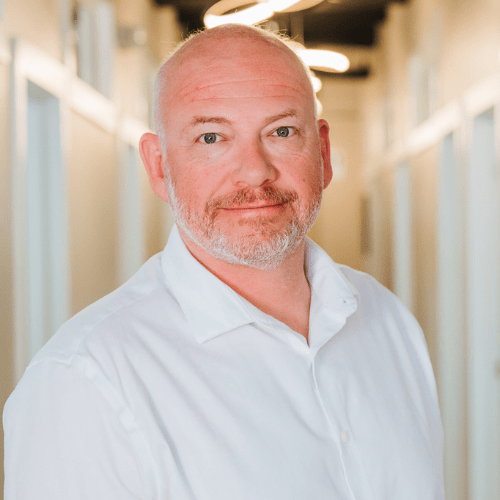
Michael D. Laplante LL.B,*CS
Michael Laplante shares over 20 years of experience and his deep knowledge of insurance tactics to fiercely advocate for motor vehicle accident victims. Certified in Civil Litigation, he guides you through the legal process with compassionate, expert support to help you secure the compensation you deserve

Lisa D. Belcourt B.A. (Hons), LL.B.
Lisa has extensive experience in all levels of the Ontario Courts and has many reported decisions in respect to applications, motions, trials and appeals. She also has extensive experience appearing before administrative tribunals.
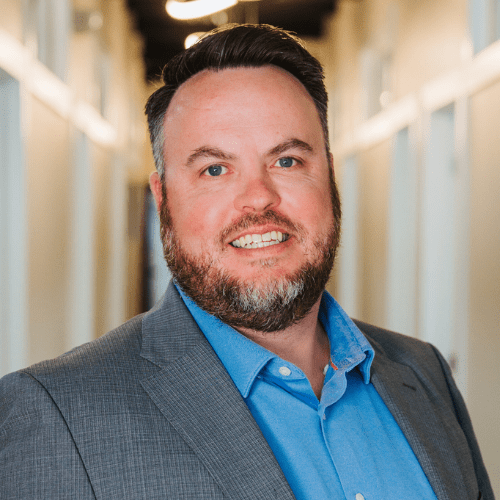
Patrick Sloan, B.A., LL.B
Patrick is a Partner of Ferguson Deacon Taws LLP. He was called to the bar in January 2009 and graduated from Aberdeen University (L.L.B), Nipissing University (B.A.), and holds a Certificate in Mediation and Dispute Resolution from York University.
4.9 Average Customer Review

Frequently Asked Questions
Injured in Orillia or Central Ontario? Talk to FDT.
Whether you are managing an insurer, navigating an injury, or simply trying to figure out where to start, the consultation is free, and there are no fees unless we recover for you. Appointments are available in Orillia at 77 Coldwater Street East, and phone or video options are available for clients across central Ontario.