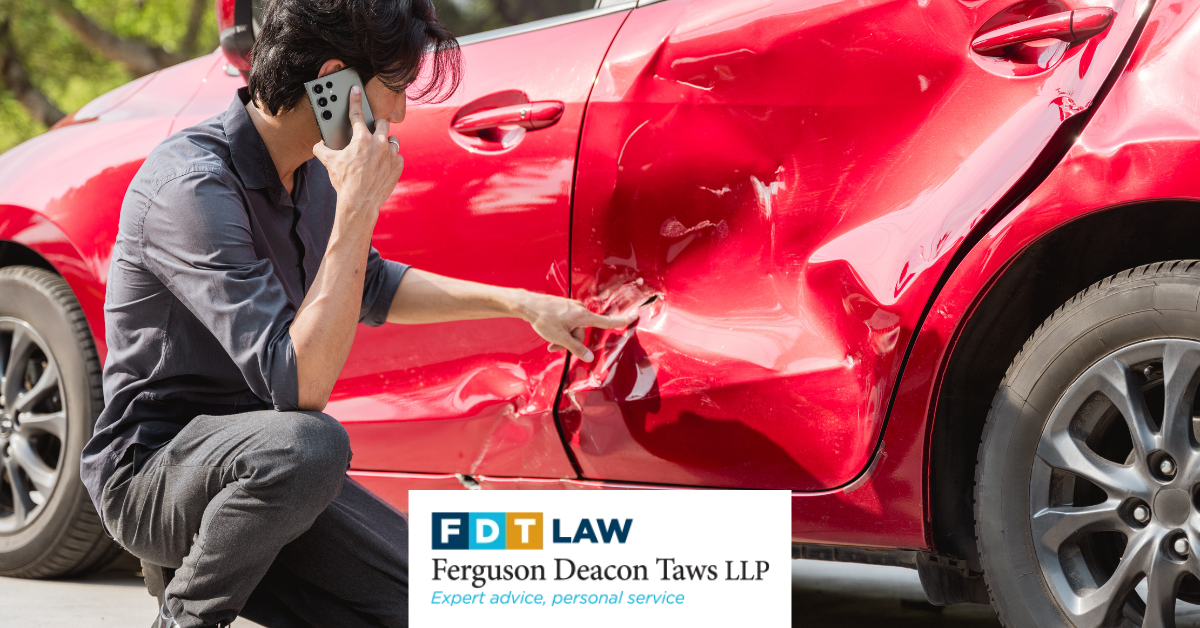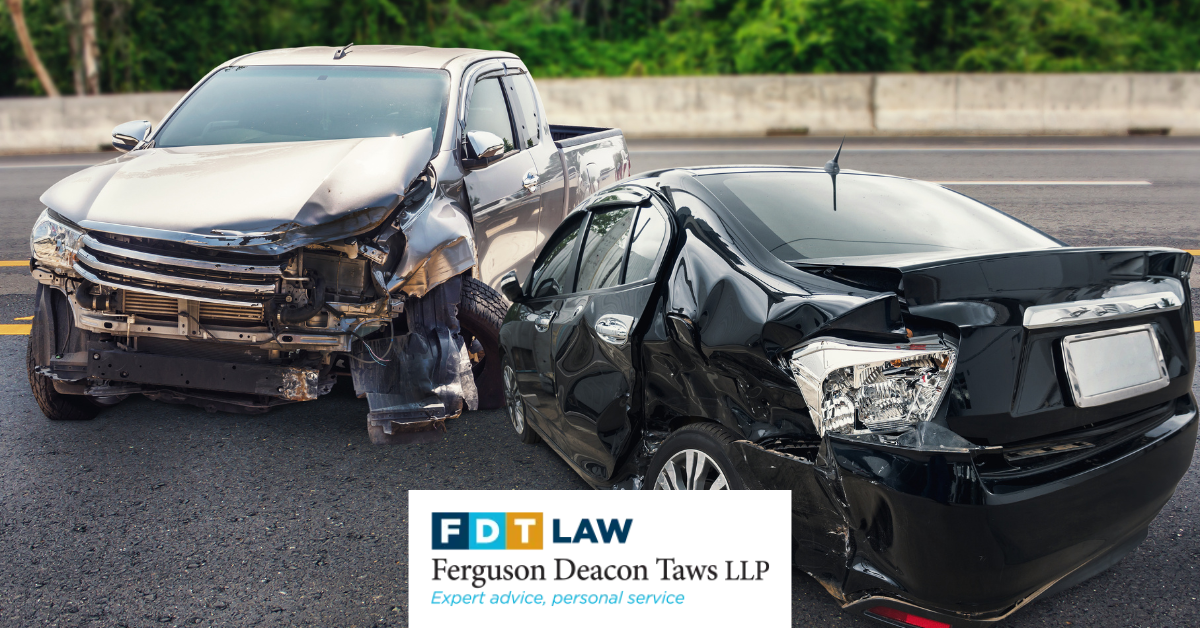

Picture this: you’re driving through Innisfil on a June morning, you push through a yellow light, and a car coming the other way clips you at the intersection. You’re hurt, your vehicle is damaged, and somewhere in the shock of it all, you’re already telling yourself the same thing many accident victims tell themselves: I was partly to blame, so I probably can’t do anything about it.
That instinct is understandable. It is also, in many cases, wrong.
Being partly at fault for a car accident in Ontario does not automatically close the door on compensation. What most people don’t realize is that Ontario operates under a system of proportional fault, not an all-or-nothing approach. Sharing some of the blame does not mean forfeiting all of your rights. What it means is that your potential compensation is assessed in proportion to your share of responsibility.
Before you accept a fault determination, sign a release, or walk away from a claim you think you can’t win, there are things you need to know about how Ontario law actually works in these situations.
How Does Ontario Law Handle Partial Fault in a Car Accident?
In Ontario, the contributory negligence law means that being partly at fault for a car accident does not prevent you from recovering compensation. It reduces your award proportionally, based on your share of responsibility.
The Negligence Act: Ontario’s Apportionment Framework
Ontario’s Negligence Act, R.S.O. 1990, c. N.1, is the foundational statute governing fault apportionment in civil claims. Under this legislation, courts divide fault among all parties who contributed to an accident. Each party’s share of responsibility is expressed as a percentage, and compensation is reduced accordingly.
The practical result is this: if a court finds you 30% at fault for a collision, you recover 70% of your assessed damages. If you are found 40% at fault, you recover 60%. Your compensation is reduced, not eliminated, by your level of responsibility. This is the distinction most accident victims in Simcoe County never hear about from their insurer.
The apportionment is based on all the evidence surrounding the accident, including police reports, witness accounts, physical evidence, and, in complex cases, accident reconstruction analysis. It is not a fixed number handed down by the insurer.
The Fault Determination Rules: How Insurers Assign Percentages
Ontario’s Fault Determination Rules (O. Reg. 668/90 under the Insurance Act) govern how insurers assign fault percentages for the purposes of accident benefits and collision claims. These are administrative guidelines, not court judgments.
This is a critical distinction. An insurer telling you that you are 50% or 100% at fault is applying an internal set of rules for their own claims process. That determination does not bind a court, and it does not represent the final word on your legal entitlement. Insurer fault assignments under the Fault Determination Rules can be challenged, and a personal injury lawyer can review the evidence to contest a percentage that does not accurately reflect what happened.
Accident Benefits: The Coverage You Have Regardless of Fault
One of the most important and least understood protections in Ontario is this: you may be entitled to accident benefits through your own insurer regardless of who caused the accident.
What SABS Covers
Ontario’s Statutory Accident Benefits Schedule (SABS), a regulation under the Insurance Act, provides a range of no-fault benefits available to injured parties through their own insurer. These include:
- Income replacement benefits, if your injuries prevent you from working
- Medical and rehabilitation benefits, covering treatment costs not paid by OHIP or private insurance
- Attendant care benefits are available if you require assistance with daily living due to your injuries
- Non-earner benefits and housekeeping benefits, depending on the circumstances
These benefits exist in a separate stream from any tort claim you might make against the other driver. They are not affected by your share of fault for the accident.
Why You Should File a SABS Claim Even If You Think You Caused the Accident
We regularly see Simcoe County clients who assumed that their partial fault meant they had no claim at all and never filed a SABS application as a result. This is a costly mistake. Fault, whether partial or full, does not disqualify you from accident benefits through your own insurer.
You must notify your insurer within 7 days of the accident. After that, you will need to complete and submit the OCF-1 Application for Accident Benefits and, once your injuries are assessed, the OCF-3 Disability Certificate. Missing these deadlines can affect your access to benefits, so acting quickly matters.
If you are unsure whether you qualify or which forms apply to your situation, speaking to a personal injury lawyer before contacting your insurer is the most protective step you can take.
Can You Still Sue the Other Driver If You Were Partly at Fault?
Yes, in most cases. If the other driver was also negligent and contributed to the collision, you may pursue a tort claim against them for damages beyond what SABS covers. Your compensation is simply reduced in proportion to your own share of fault under the Negligence Act.
The Tort Claim: Suing for Damages Beyond SABS
SABS benefits are not designed to fully compensate for serious injury losses. They cover specific categories of expense and income replacement up to regulated limits. A tort claim, brought against the at-fault driver through their insurer, can cover pain and suffering, loss of enjoyment of life, future care costs, and other heads of damages that fall outside the SABS framework.
The fact that you share some responsibility for the accident does not extinguish this right. It adjusts the amount you can recover.
How Shared Fault Affects What You Can Recover
To illustrate how this works: if your total assessed damages amount to a given figure and a court finds you 25% at fault for the accident, you recover 75% of that figure from the other party. The reduction is proportional to the evidence, not a blanket penalty for not being fully innocent.
Courts assess all the surrounding facts when apportioning fault. They are not bound by the percentages an insurer assigned. A police report, witness testimony, dashcam footage, or accident reconstruction evidence can all shift the balance.
It is also worth noting that Ontario’s Insurance Act includes a statutory deductible that applies to general damages awards for certain minor injuries. This is a technical area that a personal injury lawyer can assess based on your specific circumstances.
Because the apportioned fault percentage directly affects the value of your claim, having a personal injury lawyer review and, where appropriate, challenge the assigned percentages is one of the most financially significant steps you can take after an accident.
Why Insurers May Assign You More Fault Than You Deserve
Insurers operate under the Fault Determination Rules, which provide a structured framework for assigning fault percentages. The rules are designed to standardize insurer decisions, but they do not account for every real-world variable, and they are administered by adjusters whose interest is not necessarily aligned with yours.
When an insurer tells you that you are 50% or 100% responsible for an accident, they are applying an internal policy guideline. That assignment is the starting point for their claims process. It is not a court finding. It is not final.
The Insurer’s Interest Is Not Your Interest
A higher fault percentage assigned to you reduces the insurer’s exposure. It lowers or eliminates what they may have to pay out under a tort claim and affects how collision and accident benefit calculations are handled. Understanding this dynamic is important before you accept any determination at face value.
Common Scenarios Where Fault Is Disputed
In our experience handling motor vehicle accident claims across Simcoe County, these are the situations where fault percentages are most frequently contested:
- Left-turn versus oncoming vehicle collisions: The turning driver is not automatically 100% at fault. Speed of the oncoming vehicle, traffic signal timing, and road conditions are all relevant factors.
- Merging lane disputes: Fault in merge-related collisions on roads like Highway 400 often depends on signalling, lane markings, and the behaviour of both drivers.
- Pedestrian crossing mid-block: A pedestrian who crosses outside a crosswalk may share fault, but so may a driver who was speeding or distracted.
- Winter road conditions: On county roads and rural highways during Simcoe County winters, both drivers’ choices to speed for conditions are relevant to apportionment.
The assigned percentage is a starting point. With the right evidence and legal assessment, it can often be adjusted in your favour.
Critical Steps to Take After an Accident Where You Share Some Blame
The decisions you make in the hours and days after a collision have a direct impact on your legal position. Here is the sequence that protects your rights.
Step 1: Do Not Admit Fault at the Scene
Even an instinctive apology or an offhand comment like ‘I didn’t see you’ can be characterized as an admission and used against you. At the scene, cooperate fully with the police, exchange contact and insurance information, and document what you can with photos and notes. Do not make statements about who was responsible.
Cooperating with law enforcement is very different from admitting legal liability. What you say at the scene is not the same as a court determination of fault, but it can complicate your claim.
Step 2: File a SABS Claim Immediately
Contact your own insurer within 7 days of the accident to report the collision and initiate a SABS claim. Your fault percentage does not affect your eligibility for accident benefits. Delaying this step can limit your access to income replacement, medical coverage, and other benefits you are entitled to.
Complete the OCF-1 application as soon as possible. If you have injuries that affect your ability to work, your treating healthcare provider will need to complete the OCF-3 Disability Certificate as part of your claim.
Step 3: Do Not Settle or Sign Anything Without Legal Advice
If the other driver’s insurer contacts you or presents a settlement offer, do not sign any release without first speaking to a personal injury lawyer. A release waives your right to make future claims, including claims you may not yet fully understand the value of. Once signed, it is generally enforceable.
In our experience at FDT Law, some of the most preventable losses happen when injured people sign documents before they understand what they are giving up. Take the time to get proper advice.
Step 4: Speak to a Personal Injury Lawyer
For a tort claim against the other driver, the limitation period under Ontario’s Limitations Act, 2002 is two years from the date of the accident. For SABS, notice and filing deadlines are shorter. Missing either can affect your rights significantly.
A personal injury lawyer can assess both streams simultaneously, advise on the strength of your claim, and take on the insurers so you can focus on your recovery. FDT Law’s personal injury team serves Innisfil, Midland, and the wider Simcoe County area. Speaking to us costs you nothing in commitment, and it may make a significant difference in what you recover.
How a Personal Injury Lawyer in Innisfil or Midland Can Help
In a partial-fault scenario, the value of legal counsel comes down to three things: challenging the fault percentage, calculating your true entitlement across both claims streams, and negotiating with insurers who have their own interests in the outcome.
Challenging the Fault Percentage
At FDT Law, our personal injury team reviews the full evidentiary picture: the police report, witness statements, any available dashcam or surveillance footage, vehicle damage assessments, and, in complex cases, accident reconstruction analysis. Where the assigned fault percentage is not supported by the evidence, we challenge it.
A reduction in your assigned fault percentage is not just a legal win. It directly increases the compensation you can recover from the other party’s insurer under the proportional apportionment framework of the Negligence Act. In some cases, the difference is substantial.
Calculating Your True Entitlement
Most accident victims in Simcoe County who approach us after a partial-fault collision are only aware of one stream of potential compensation. In reality, there are two running simultaneously: the SABS stream through your own insurer, and the tort stream against the at-fault driver. Each has its own rules, timelines, and entitlements.
Getting both right and understanding how they interact is where an experienced personal injury lawyer adds the most value. We calculate what you are owed across both streams, identify entitlements you may not have known you had, and ensure nothing is left on the table.
Negotiating with Insurers
Insurers are experienced negotiators. Many claimants, particularly those who believe they share some blame for an accident, accept early offers because they assume that is the most they can expect. It often is not. An insurer’s opening position reflects its interest, not your full entitlement.
Were You Partly at Fault for an Accident in Innisfil or Midland? Let’s Review Your Claim.
Accidents are stressful under any circumstances. When you believe you share some of the blame, the confusion and second-guessing that follow can be overwhelming. You may be dealing with injuries, time off work, and financial pressure, all while wondering whether you even have the right to ask for help.
You do. Partial fault does mean no rights. Under Ontario law, your share of responsibility reduces your potential compensation; it does not eliminate it. And the fault percentage your insurer assigned you is not the final word.
FDT Law’s personal injury team serves Innisfil, Midland, and the wider Simcoe County area, including Barrie, Penetanguishene, Orillia, Bradford, and Collingwood. We offer consultations to help accident victims understand what they are actually entitled to across both the SABS stream and any potential tort claim, before anything is signed.
Call FDT Law’s Innisfil office: 705-436-1701
Call FDT Law’s Midland office: (705) 526-1471
Book a consultation online: fdtlaw.ca/contact
Learn more about our personal injury services: fdtlaw.ca/our-expertise/personal-injury/
Frequently Asked Questions About Partial Fault Car Accidents in Ontario
Can I still get compensation if I was partly at fault for a car accident in Ontario?
Yes. Ontario’s Negligence Act allows courts to apportion fault among all contributing parties. If you are found partly at fault, your compensation is reduced by your share of responsibility, not eliminated. A claimant found 30% at fault can still recover 70% of their assessed damages. The all-or-nothing assumption is one of the most common and costly misconceptions we encounter.
How does contributory negligence work in Ontario car accident claims?
Under Ontario’s Negligence Act, fault is divided among all parties who contributed to an accident. Each party’s share is expressed as a percentage, and compensation is proportionally reduced by that share. When determining fault, courts do not rely solely on an insurer’s internal findings; instead, they evaluate the entire evidentiary record.
What if the insurer says I am 100% at fault, but I disagree?
Insurer fault assignments under the Fault Determination Rules are not court judgments. They bind insurers for the purposes of accident benefit and collision claims, but they do not determine what a court would find. A personal injury lawyer can review police reports, witness statements, and other evidence to challenge an apportionment that does not accurately reflect what happened.
Can I claim accident benefits if I caused the accident in Ontario?
Yes. Ontario’s Statutory Accident Benefits Schedule (SABS) provides no-fault benefits through your own insurer regardless of who caused the accident. These include income replacement, medical and rehabilitation benefits, and attendant care. You must notify your insurer within 7 days. Fault does not disqualify you from these benefits.
How long do I have to make a car accident claim in Ontario if I was partly at fault?
For a tort claim against the other driver, you generally have two years from the date of the accident under Ontario’s Limitations Act, 2002. SABS deadlines are shorter. You must notify your own insurer within 7 days. Acting promptly preserves evidence and keeps all your options open.
Does admitting fault at the scene of an accident affect my claim?
Yes. Statements made at the scene, including instinctive apologies, can be characterized as admissions and used in insurance and legal proceedings. You should cooperate with the police and exchange information, but avoid making statements about who was responsible. Cooperating with law enforcement is not the same as admitting legal liability.